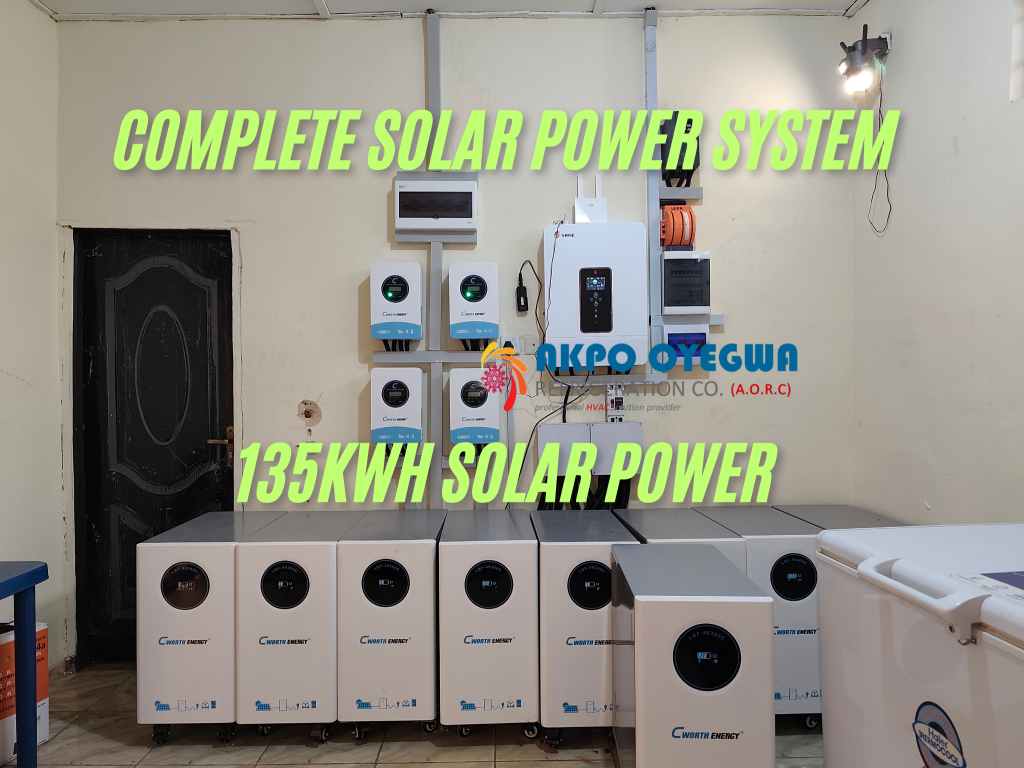
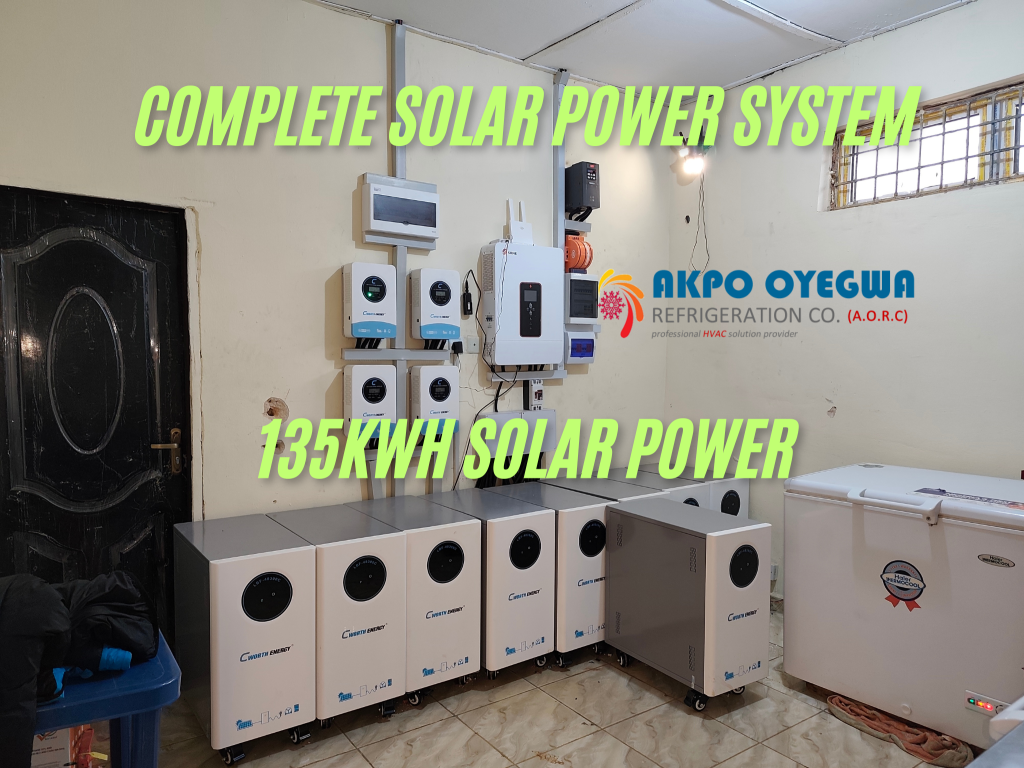
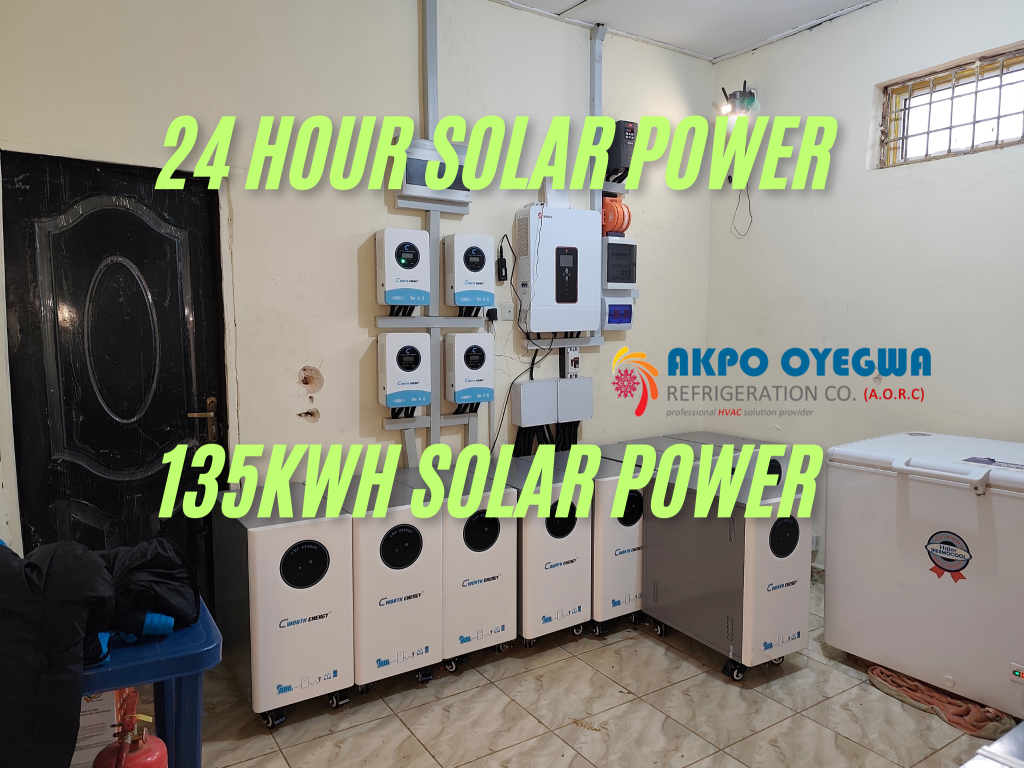
Solar Power for Manufacturing Companies in Nigeria
Manufacturing companies across Nigeria are under increasing pressure from rising electricity costs, unstable public power supply, and the high operating expenses associated with diesel generators. Frequent power outages interrupt production schedules, damage sensitive equipment, increase maintenance costs, and reduce profitability.
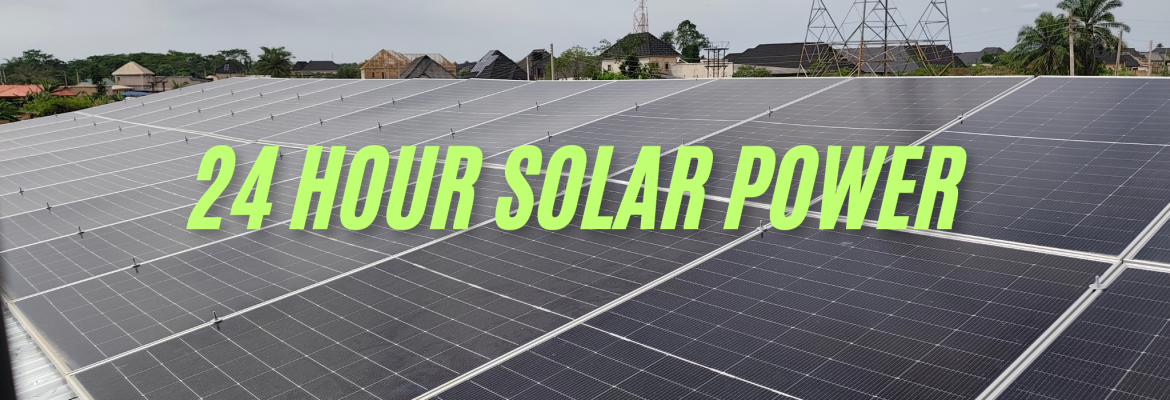
As energy expenses continue to rise, many successful manufacturers are investing in commercial solar power systems to secure reliable electricity, reduce long-term operating costs, and improve business continuity.
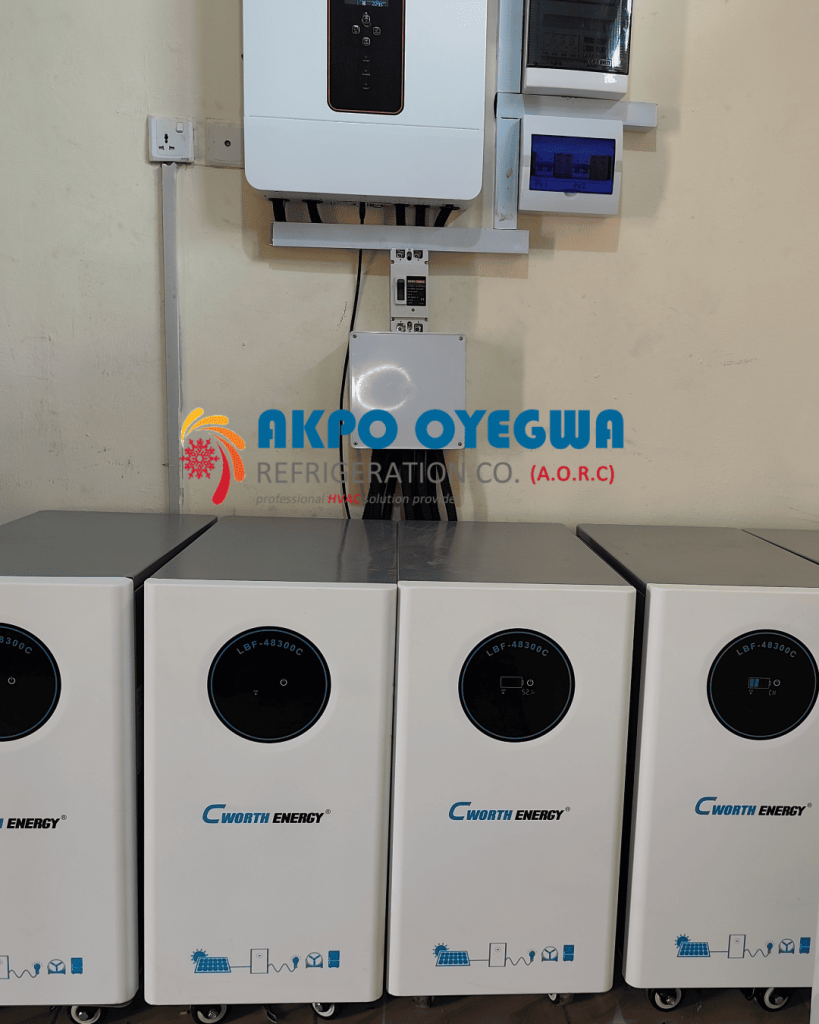
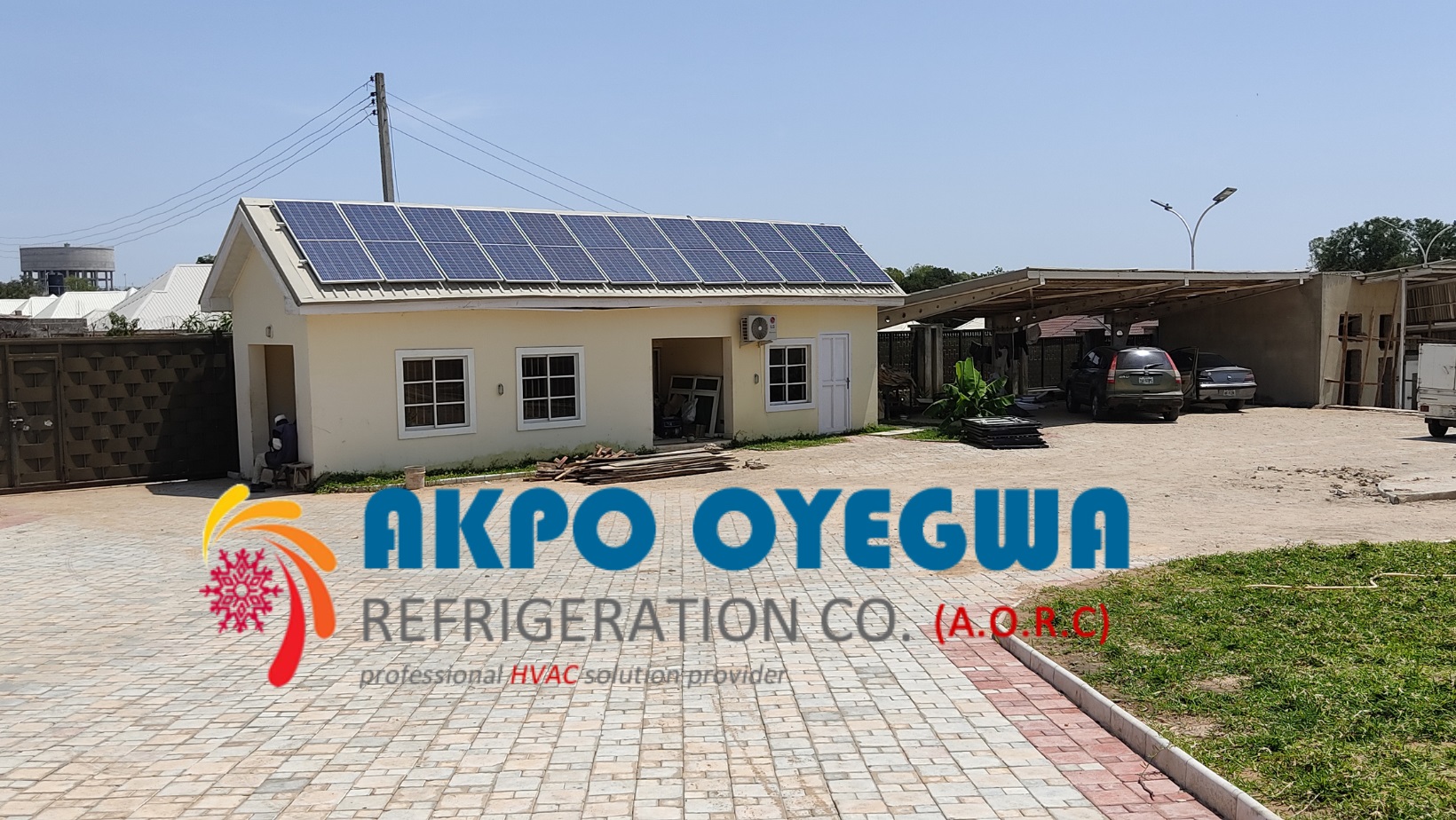
Akpo Oyegwa Refrigeration Company designs and installs industrial solar power systems that help factories operate more efficiently while reducing dependence on the national grid and diesel generators.
Below is a general guide to the prices of quality solar products available in Nigeria.
Solar Product
Estimated Price (₦)
550W Solar Panel
₦90,000 – ₦190,000
5kW Hybrid Inverter
₦700,000 – ₦1,900,000
10kW Hybrid Inverter
₦1,500,000 – ₦4,000,000
15kWh Lithium Battery
₦2,500,000 – ₦6,500,000
20kWh Lithium Battery
₦3,500,000 – ₦9,000,000
Solar Mounting Structure
Varies by project
DC Cable & Accessories
Varies
Solar Charge Controller
Varies
Complete Residential Solar System
Quote Required
Commercial Solar Installation
Quote Required
Industrial Solar Power System
Quote Required
Note: Prices change frequently due to exchange rates, import costs, product specifications, and manufacturer pricing. Contact Akpo Oyegwa Refrigeration Company for an up-to-date quotation.
Solar Price List in Nigeria
Disclaimer*: Price is subject to change based on market conditions.
S/N
Complete Solar power system including inverter, solar panels, batteries, charger controllers, cables, accessories and installation cost
Unit of measurement KVA
Product: Complete Solar power system
Price: NGN
1
1KVA
₦890,000
2
2KVA
₦1,600,000
3
3KVA
₦3,980,000
4
5KVA
₦4,820,000
5
10KVA
₦9,920,000
6
15KVA
₦12,840,000
7
20KVA
₦18,960,000
8
25KVA
₦22,860,000
9
30KVA
₦26,890,000
10
40KVA
₦28,920,000
11
45KVA
₦29,490,000
12
50KVA
₦44,860,000
13
80KVA
₦58,860,000
14
100KVA
₦88,860,000
15
150KVA
₦186,860,000
16
180KVA
₦224,860,000
17
200KVA
₦288,960,000
Request for an official quotation
Why Manufacturing Companies Need Solar Power
Electricity is one of the largest operating expenses for manufacturing businesses. Every production delay caused by power failure can lead to:
Lost production hours
Missed delivery deadlines
Increased diesel expenses
Equipment downtime
Reduced profit margins
Higher maintenance costs
Increased operational risks
Solar power provides a dependable alternative that enables businesses to maintain operations with greater stability and lower energy costs.
Major Challenges Facing Nigerian Manufacturers
Many manufacturing companies experience:
Rising Diesel Costs
Diesel prices continue to increase, making generator-powered production increasingly expensive.
Unstable National Grid
Unexpected power outages can halt production without warning.
High Monthly Electricity Bills
Manufacturers often spend millions annually on electricity.
Equipment Damage
Voltage fluctuations can shorten the lifespan of industrial equipment.
Increasing Operating Expenses
Energy costs directly affect product pricing and competitiveness.
How Commercial Solar Power Solves These Problems
A professionally designed industrial solar system provides:
Lower Electricity Bills
Solar energy significantly reduces dependence on utility power.
Reduced Diesel Consumption
Businesses can dramatically cut fuel expenses.
Continuous Operations
Battery storage provides backup power during outages.
Improved Equipment Protection
Stable power helps protect expensive machinery.
Long-Term Cost Savings
Solar systems continue generating electricity for many years, offering ongoing savings after installation.
Industries That Benefit from Industrial Solar Power
Commercial solar systems are ideal for:
Food Processing Companies
Beverage Manufacturers
Pharmaceutical Companies
Plastic Manufacturing Plants
Packaging Companies
Printing Presses
Textile Manufacturers
Chemical Processing Plants
Cold Storage Facilities
Agricultural Processing Plants
Warehouses
Distribution Centers
Industrial Estates
Why Businesses Choose Akpo Oyegwa Refrigeration Company
Our commercial solar solutions are designed specifically for demanding industrial environments.
We provide:
Professional site inspections
Energy consumption analysis
Custom solar system design
High-quality solar panels
Hybrid inverter solutions
Industrial lithium battery storage
Professional installation
Testing and commissioning
Preventive maintenance services
Technical support
Every installation is tailored to the client’s operational requirements rather than using a one-size-fits-all approach.
For manufacturers with substantial daytime electricity demand, commercial solar often delivers significant savings over its lifetime. While the upfront investment can be considerable, reducing diesel use and lowering grid electricity costs may improve long-term financial performance, depending on energy consumption, system design, and local conditions.
Why Professional Installation Matters
Industrial solar systems require detailed engineering and planning.
Choosing an experienced contractor helps ensure:
Accurate load calculations
Proper equipment sizing
Safe installation practices
High-quality components
Reliable long-term performance
Compliance with applicable standards
Poorly designed systems can result in under performance, unexpected downtime, and avoidable maintenance costs.
Frequently Asked Questions
Can solar power operate a manufacturing factory?
Yes. A properly engineered commercial solar system can supply a significant portion of a factory’s electricity needs. The exact capability depends on the facility’s energy demand, operating schedule, available roof or ground space, and whether battery storage or grid backup is included.
Can solar replace diesel generators?
In many facilities, solar can greatly reduce diesel generator use. Whether it can fully replace generators depends on the site’s power requirements, available solar resources, and system configuration.
How long do commercial solar panels last?
Quality solar panels commonly carry performance warranties of around 25 years, while actual service life may extend beyond that with proper maintenance. Other components, such as batteries and inverters, have different expected lifespans.
Which industries benefit the most?
Manufacturing, food processing, pharmaceuticals, agriculture, logistics, warehousing, and cold storage businesses often see strong benefits because of their substantial electricity consumption.
Request a Professional Commercial Solar Assessment
Every manufacturing facility has unique power requirements. Akpo Oyegwa Refrigeration Company conducts professional assessments to recommend the most suitable commercial solar solution based on your energy usage, production schedule, and expansion plans.
Whether you operate a single production line or multiple industrial facilities, we can help you develop a reliable energy strategy tailored to your business.
Get Started Today
If your manufacturing company is ready to reduce electricity costs and improve operational reliability, now is the ideal time to explore commercial solar power.
Next Steps
View our Solar Power Price List to explore available commercial solutions.
Fill out our Quotation Request Form for a customized proposal based on your facility’s requirements.
Follow Akpo Oyegwa Refrigeration Company on our social media platforms for project updates, industry insights, and energy-saving tips.
Contact our commercial sales team to schedule a professional site assessment.